
Owls have fascinated people for thousands of years. You’ll find them carved into stone, painted on pottery, printed on books, and shared online as quiet symbols of insight. In the United States, owl symbolism often blends ancient ideas with modern emotions like curiosity, independence, and self-trust.
At its core, owl symbolism speaks to how humans understand knowledge, darkness, and intuition. Because owls move silently and see at night, people have long connected them to hidden truth and inner awareness. Today, these meanings still shape how Americans interpret owl signs, art, tattoos, and stories.
This guide explores Owl Symbolism: Spiritual and Symbolic Meaning of Owls through history, culture, psychology, and modern life. You’ll learn where these ideas came from, how they changed over time, and why owls still matter today.
Quick Answer
Owl Symbolism: Spiritual and Symbolic Meaning of Owls centers on wisdom, intuition, and seeing what others miss. In the United States, owls often symbolize knowledge, quiet intelligence, and personal insight, while older traditions also link them to mystery and transition.
TL;DR
• Owls symbolize wisdom, intuition, and awareness
• Night vision connects owls to hidden truth
• US culture favors positive, knowledge-based meanings
• Some traditions link owls to death or change
• Modern uses include tattoos, decor, and education symbols
What Is Owl Symbolism?
Owls appear across cultures as powerful symbolic animals. This section explains how owls look, behave, and appear in symbolic form, especially for American readers.
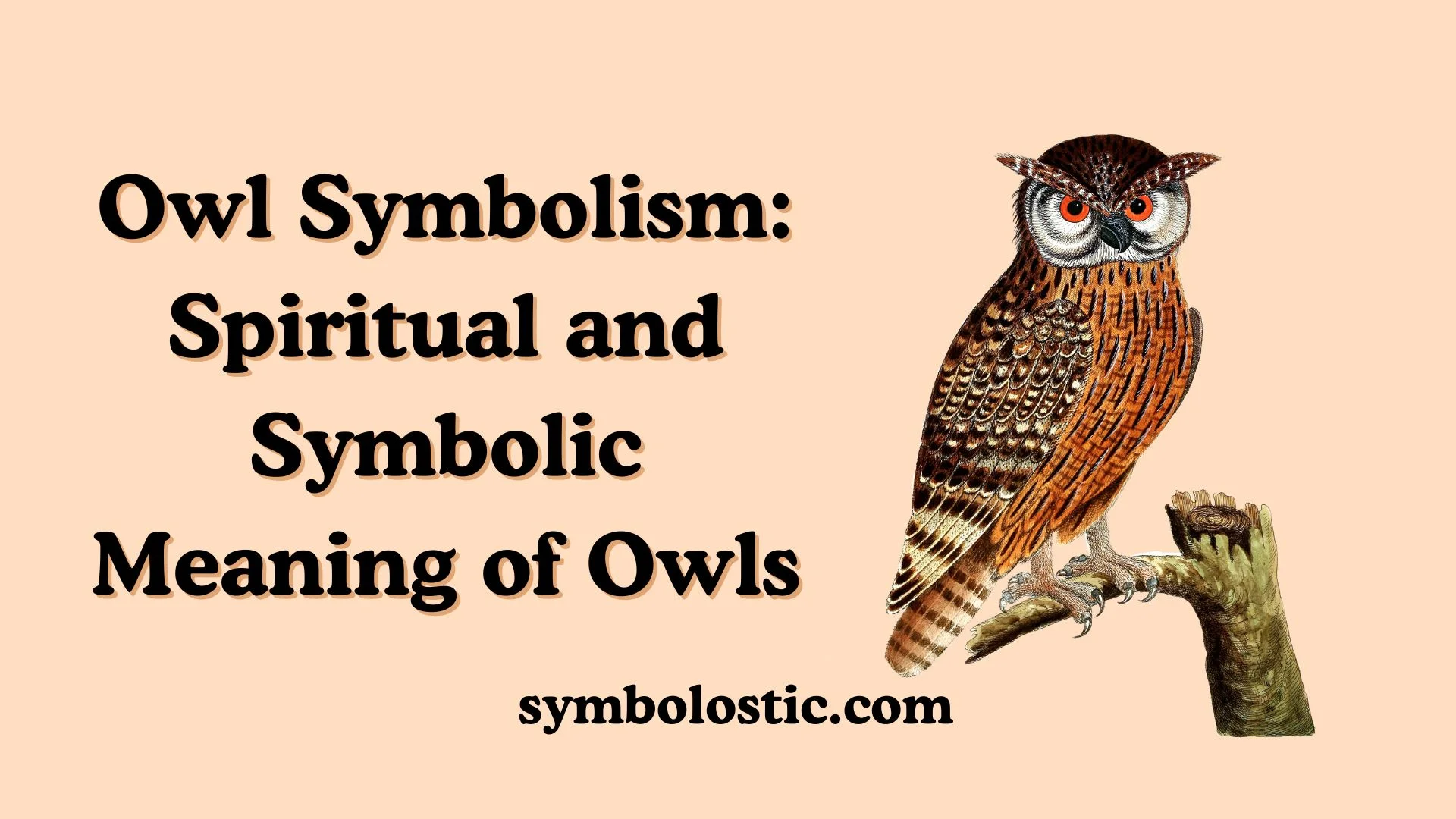
Owls stand out because of their large eyes, rotating heads, and silent flight. These traits shape almost every meaning linked to them today.
How Owls Appear as Symbols
Owls show up in many visual and artistic forms. Their appearance often guides interpretation.
• Large forward-facing eyes suggest awareness
• Silent wings symbolize discretion and observation
• Perched posture signals patience and control
• Night settings emphasize mystery and intuition
• Earth tones convey calm and seriousness
Core Meanings at a Glance
Across most modern interpretations, owls point to a few shared ideas.
• Wisdom gained through experience
• Insight beyond surface appearances
• Trusting intuition and inner voice
Historical Origins of Owl Symbolism
Owl symbolism did not begin in modern America. Its roots stretch deep into ancient civilizations.
Understanding these origins helps explain why some meanings feel positive while others feel uneasy.
Ancient Greece and Rome
In ancient Greece, the owl was sacred to Athena, goddess of wisdom. As a result, owls symbolized intelligence, learning, and strategy.
Roman culture inherited this symbolism but added darker tones. Romans sometimes saw owls as omens, especially before major events.
Pre-Christian European Beliefs
Before Christianity spread, many European cultures linked owls to the spirit world. Because owls were active at night, people believed they crossed unseen boundaries.
• Associated with magic and prophecy
• Linked to forests and liminal spaces
• Seen as messengers between worlds
Medieval Christian Influence
During the Middle Ages, owl symbolism shifted. Darkness became associated with ignorance or moral danger.
Owls sometimes symbolized isolation or spiritual blindness. However, these views never fully erased older meanings.
Owl Symbolism in Native American Traditions
In the United States, Native American perspectives play an important role in owl symbolism.
It’s important to note that meanings vary widely between tribes.
Diverse Tribal Interpretations
Some tribes viewed owls as protectors or guides. Others associated them with warnings or transitions.
• Messengers from ancestors
• Guardians of sacred knowledge
• Symbols of change or endings
Respectful Context Matters
Today, many Native communities emphasize cultural context. Owl symbolism should not be generalized or romanticized.
Instead, it should be understood as specific to each tradition.
What Do Owls Symbolize in the United States?
Modern American culture largely embraces positive owl symbolism. Education, media, and psychology shape this view.
Owls now represent intelligence, independence, and thoughtful living.
Education and Knowledge
Owls often appear in schools, libraries, and academic logos. This usage draws from Greek symbolism.
• Learning and study
• Critical thinking
• Lifelong curiosity
Popular Media and Storytelling
Children’s books and films often portray owls as wise mentors. This reinforces trust-based meanings.
Because of this, fear-based interpretations are less common today.
Spiritual Meaning of Owls
Spiritually, owls are often seen as guides rather than warnings in modern interpretations.
They invite reflection and self-awareness.
Intuition and Inner Vision
Owls symbolize seeing beyond illusion. Spiritually, this means listening to inner truth.
• Heightened awareness
• Emotional clarity
• Self-reflection
Transition and Personal Growth
Owls also represent transitions. These are not necessarily negative.
Instead, they often suggest shedding illusions or outdated beliefs.
Emotional and Psychological Associations
Psychologically, owls reflect how people see themselves or wish to be seen.
Their symbolism often connects to identity and values.
Emotional Signals
People drawn to owls often value depth and independence.
• Calm under pressure
• Comfort with solitude
• Thoughtful decision-making
Archetypal Meaning
In psychology, owls resemble the “wise observer” archetype. This figure watches, learns, and acts carefully.
Modern Uses of Owl Symbolism
Owls appear everywhere in modern American life. Their symbolism adapts easily to personal expression.
Tattoos and Personal Symbols
Owl tattoos often represent wisdom earned through hardship.
• Personal growth markers
• Tribute to learning or survival
• Symbols of independence
Home Decor and Fashion
Owls in decor suggest warmth and intelligence. They often appear in rustic or academic styles.
Social Media and Digital Culture
Owls now appear as emojis, avatars, and usernames. They signal thoughtfulness or quiet humor.
Owl Colors and Their Meanings
Color adds another layer to owl symbolism. Different shades carry different emotional tones.
| Context | Meaning in the USA | Common Associations | Notes |
| White owl | Clarity and guidance | Spiritual insight | Often seen as rare |
| Brown owl | Stability and grounding | Nature and home | Most common |
| Black owl | Mystery and depth | Shadow self | Less literal today |
| Gray owl | Balance and neutrality | Wisdom without bias | Popular in art |
Misunderstandings and Controversies
Not all owl symbolism is positive. Some misunderstandings still exist today.
Death and Bad Omens
In some cultures, owls were linked to death. In the US, this idea survives mostly in folklore.
Today, most people interpret owls metaphorically rather than literally.
Cultural Misuse
Using owl symbolism without cultural awareness can cause harm. This is especially true with Native imagery.
Respect and context matter.
How Owl Symbolism Has Shifted Over Time
Owl symbolism continues to evolve. Modern meanings differ sharply from medieval fears.
Today, owls are more likely to represent insight than danger.
• Shift from fear to curiosity
• Education replaced superstition
• Personal meaning outweighs tradition
FAQs
Are owls a good spiritual sign?
In modern American symbolism, yes. Owls often signal awareness, growth, and intuition.
What does seeing an owl at night mean?
Many interpret it as a reminder to trust intuition. Others see it as coincidence.
Do owls symbolize death?
Historically, some cultures believed this. Today, most Americans view this symbolically, not literally.
Why are owls linked to wisdom?
This comes from ancient Greece and their calm, observant behavior.
Are owl tattoos spiritual?
They can be. Many people use them to mark personal insight or transformation.
Conclusion
Owl symbolism blends ancient history with modern meaning. Across centuries, owls have represented wisdom, mystery, and the ability to see beyond appearances.
In the United States, Owl Symbolism: Spiritual and Symbolic Meaning of Owls focuses on knowledge, intuition, and thoughtful independence. While older beliefs still echo in folklore, today’s interpretations emphasize personal growth and understanding.
Ultimately, owls remind us to pause, observe, and trust what we learn in quiet moments.