
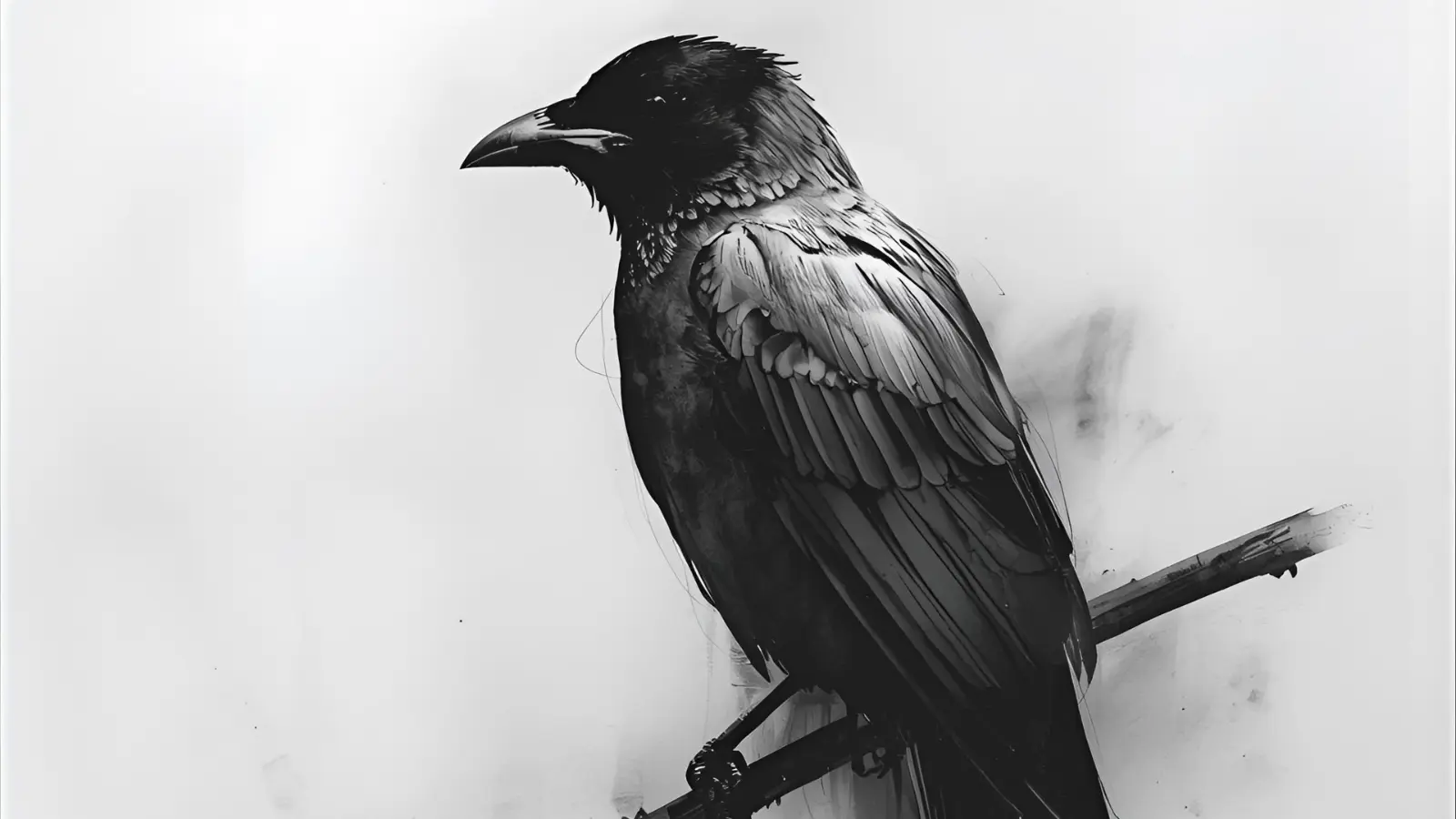
At first glance, the word “rook” sounds simple. In reality, it carries one of the richest symbolic profiles in myth and games. The term covers the rook chess piece, the rook bird (a black corvid), and even the rook piercing in modern body art and ear symbolism.
In rook symbolism, these strands come together in powerful ways. The rook (chess piece) evokes strength, stability, strategy, protection and fortress energy, reflecting its origin as a war chariot and its role as the castle-like tower on the board. By contrast, rook bird symbolism is darker and more complex. In traditional European lore, the rook bird can signal death, bad luck, and ominous signs, yet in other stories it stands for good fortune, community, intelligence, weather wisdom and rural protection.
This guide explores rook symbolism spirituality, black rook symbolism, rook bird mythology, rook vs crow meanings, and the modern symbolism behind the rook piercing and rook tattoo. Along the way, we’ll also look at the rook name origin in chess and the debated rook name meaning in Bible-related word studies, so you get a complete picture of this layered symbol.
Quick Answer
In symbolism, a rook represents two main ideas running in parallel:
- As a chess piece, the rook stands for strength, stability, protection, strategy and long-range power. Its roots in the ancient war chariot add themes of movement, military courage, disciplined force and fortress-like security.
- As a bird, the rook often symbolizes death, misfortune and ominous change in folklore. However, it can also stand for good luck, community, intelligence, prophecy and reading the weather, especially through its rookeries and nesting habits.
In modern life, people also use “rook” as a symbol of inner strength, resilience, subtle rebellion and personal style through rook piercings and rook tattoos.
Table of Contents
• Rook Symbolism at a Glance
• Rook (Chess Piece): Fortress, Chariot, and Strategic Power
• Rook Name Origin in Chess
• Rook Symbolism in Spirituality
• Black Rook Symbolism
• Rook Bird Basics and Mythology
• Rook Bird Folklore: Death, Bad Luck, and Weather Signs
• Community and Wisdom: Rook “Parliaments”
• Rook vs Crow: How They Differ (Symbolically and in Nature)
• Rook Piercing Symbolism
• Rook Tattoo Meaning (Chess and Bird)
• Rook Name Meaning in Bible Contexts
• FAQs About Rook Symbolism
• Final Thoughts: Living with Rook Energy
TL;DR: Rook Symbolism in One Glance
• Rook (chess piece) → symbolizes strength, stability, strategic thinking, protection and a fortress-like presence, rooted in its origin as a war chariot racing straight across the battlefield.
• Rook (bird) → represents death, bad luck and ominous signs in some European traditions, but also good fortune, community, intelligence and weather warnings through its loud rookeries and the height of its nests.
• In spirituality, rook symbolism blends spiritual protection, grounded strength, awareness of life cycles and the power of community. The chess rook adds themes of boundaries, safe structures and defending what truly matters.
• Black rook symbolism often emphasizes shadow, mystery, grief, night energy and serious transformation, while still offering a protective, watchful presence.
• A rook piercing tends to symbolize inner strength, resilience, patience, emotional balance, subtle rebellion and self-expression, and for some people it also hints at spiritual clarity or energetic balance.
• Rook tattoos can fuse the tower or castle from chess with the rook bird to express strategy, loyalty, defense of loved ones, community and comfort with darker themes like mortality and change.
Rook Symbolism at a Glance
You can picture rook symbolism in two main columns.
Rook (chess piece)
- Strength and stability
- Strategic thinking and long-range planning
- Protection, defense and strong foundations
- War chariot energy: speed, impact and force
- Castling and guarding the king: loyal protector
Rook (bird)
- Death, misfortune and ominous signs in older lore
- Good luck near kind households in some rural beliefs
- Community, tribe and close-knit social bonds
- Intelligence, problem-solving and survival skill
- Weather and seasonal signs through nest height and flock behavior
Together, these images create a symbol that holds both light and shadow. The rook can be a guardian at the gate or a messenger of endings—a sign to hold your ground or to accept the next chapter.
Rook (Chess Piece): Fortress, Chariot, and Strategic Power
In chess, the rook is one of the most powerful pieces on the board. It moves in straight lines, horizontally and vertically, controlling long files and ranks. Because of that, players see it as the backbone of attack and defense.
Symbolically, the rook (chess piece) represents:
- Strength and stability – Often drawn as a tower or castle, it stands for solid structures, strong walls and firm foundations.
- Chariot power – Historically it came from a war chariot, suggesting speed, impact and disciplined force cutting through the battlefield.
- Protection – In castling, the rook helps shield the king, reinforcing its role as a guardian and defender.
- Straightforward action – The rook does not move diagonally or jump. It favors clear, direct paths and honest moves.
- Endgame dominance – In many chess endgames, rooks decide the battle, which adds themes of finishing what you start and seeing projects through to the end.
If you feel drawn to the rook as a symbol, you might be resonating with structured strength, loyalty, clear planning and the power of steady strategy.
Rook Name Origin in Chess
The rook name origin in chess goes back to Persian and Indian roots:
- The English word rook comes from the Persian “rukh”, meaning chariot or wagon.
- In ancient chaturanga (a precursor to chess), the related piece represented a war chariot, often called “ratha” in Sanskrit.
- Later, as chess spread through Europe, the image shifted into a castle or tower, and many languages kept that fortress idea in their piece names.
There is also a separate mythic bird from Persian and Arabic tales called the “rukh” or roc, a giant predatory bird. Some writers like to connect the chess rook to this legendary creature symbolically, though language experts still debate how strong that link really is.
Either way, the name ties the rook to force, movement, power and imposing presence—whether you picture a chariot, a fortress, or a mythic bird.
Rook Symbolism in Spirituality
In spirituality, people often blend rook meanings from both the chess piece and the bird:
- From chess, the rook becomes a symbol of grounding, structure, boundaries and protection.
- From the bird, it carries themes of facing shadow, reading signs and trusting the wisdom of community.
So, rook symbolism spirituality can include:
- Stability and safe foundations – building a life that can hold pressure and challenge.
- Protection and guardianship – standing watch over loved ones or over your own energy.
- Shadow awareness – accepting heavier emotions like grief, fear or anger instead of burying them.
- Community and tribe – valuing your “rookery”: your circle of friends, family or chosen community.
- Reading the weather of life – noticing patterns, omens and subtle shifts before a storm arrives.
As a personal symbol, the rook can remind you to set clear boundaries, stand firm when it matters and stay aware of both emotional and spiritual weather around you.
Black Rook Symbolism
Black rook symbolism appears in two main forms:
- The black rook chess piece, especially in modern sets.
- The rook bird, a naturally black corvid often mistaken for a crow.
Because of the color and the folklore, black rooks often stand for:
- Shadow, death and endings – not as pure negativity, but as reminders that cycles close and something new follows.
- Mystery and the unseen – events happening behind the scenes or in the unconscious mind.
- Protection at night – the idea of a dark guardian on the wall or in the tree, quietly watching.
- Serious focus – the black rook energy feels sober, attentive and grounded rather than playful.
For many people, a black rook image (on a card, logo, tattoo or chess piece) feels like a silent sentinel: not flashy, but always watching and ready.
Rook Bird Basics and Mythology
The rook bird (Corvus frugilegus) belongs to the crow family (Corvidae). It is:
- Mostly found across Europe and parts of Asia.
- Black-feathered with a whitish bare patch around the base of the bill in adults.
- Highly social, nesting in colonies called rookeries, usually at the tops of tall trees near farms or villages.
In rook bird mythology and folklore, these birds often appear as heavy, noisy, shadowy figures hovering over fields, graveyards or old trees. They share the “dark corvid” space with crows and ravens, so their stories often overlap:
- A bird of death and misery in some tales.
- A guardian of the fields, linked to crops, scarecrows and rural life.
- A messenger or trickster, carrying hints of prophecy, warning or hidden knowledge.
Because of their look and behavior, rooks sit somewhere between ominous omen and wise, watchful neighbour.
Rook Bird Folklore: Death, Bad Luck, and Weather Signs
Traditional European folklore around the rook bird is rich and sometimes harsh.
Death and misfortune
- If a rookery suddenly abandons its long-established site, some superstitions claim that someone connected to the land will die.
- New rookeries near a house were sometimes viewed as unlucky or tied to illness and misery.
Good luck and kind households
- In other stories, rooks were said to build near kind, generous families. In those places, a rookery could be a sign of good character and blessing.
Weather and seasons
- High nests at the tops of trees suggested fine weather and a good summer.
- Lower nests were taken as a warning of wet, cold and stormy conditions.
So, what is the folklore about rook birds? It is a blend of bad omen, weather forecaster, character test and sometimes quiet blessing, depending on the region and era.
Community and Wisdom: Rook “Parliaments”
Rooks are extremely social birds. They:
- Nest together in colonies called rookeries.
- Gather in large, noisy groups sometimes described as “parliaments”.
From this, rook bird symbolism adds:
- Community and tribe – the power of sticking with your group through seasons.
- Shared wisdom – many minds and many eyes watching the same fields and skies.
- Overwhelming crowds – huge flocks can feel intimidating and loud, reminding us that community can both support and overwhelm.
If you connect with the rook, you may be drawn to tight-knit groups, long-term partnerships and the idea that social bonds are a major source of strength.
Rook vs Crow: How They Differ (Symbolically and in Nature)
Because rooks and crows are both black corvids, people often ask about rook vs crow.
In nature:
- Rooks
- Have bare grey-white skin at the base of the bill (in adults).
- Show shaggier thigh feathers and a more peaked head.
- Are very social, often seen in flocks and rookeries.
- Crows (carrion crows)
- Have a fully feathered face and glossy black plumage.
- Are more often solitary or in small groups, though they can also join flocks.
Symbolically:
- The rook leans toward community, group energy, rural omens and weather wisdom.
- The crow leans toward personal messages, intelligence, trickster energy and spiritual communication.
What is the spiritual message of a crow?
In many traditions, the crow is:
- A messenger between worlds or between the conscious and unconscious mind.
- A sign of change, transformation and facing truth.
- A reminder to pay attention to signs, dreams and repeated patterns.
When you place rook and crow together, rook symbolism feels more tribal and environmental, while crow symbolism feels more personal and psychological.
Rook Piercing Symbolism
A rook piercing is a cartilage piercing through the antihelix ridge of the ear. It became popular in the 1990s and was named after piercer Erik “Rook” Dakota.
So, what does a rook piercing symbolize? There is no single official meaning, but common themes include:
- Bravery and pain tolerance – it goes through thick cartilage, so it takes courage and patience to heal.
- Inner strength and resilience – many people choose it as a marker of getting through a hard time or stepping into a stronger self.
- Subtle rebellion and individuality – it’s not the most obvious piercing, so it feels like a quiet but confident statement.
- Emotional balance and spiritual clarity (for some) – some spiritual communities link it to energy work or heart-centered healing, although that is personal belief rather than medical fact.
In short, a rook piercing is often treated as a symbol of personal growth, courage and self-expression, whether or not you layer explicit spiritual meaning on top.
Rook Tattoo Meaning (Chess and Bird)
A rook tattoo can draw from:
- The chess rook (tower or castle).
- The rook bird.
- Or a combination of both.
Chess rook tattoo symbolism
- Strength and stability – a solid tower that does not fall easily.
- Strategy and intellect – love of chess, planning and calculated moves.
- Protection and defense – guarding family, values or personal boundaries.
Rook bird tattoo symbolism
- Comfort with shadow – readiness to face death, loss or darker emotions.
- Community and loyalty – devotion to a “tribe” or chosen family.
- Weather watcher or intuitive – tuning into subtle shifts in mood, energy or environment.
A black rook tower perched with a rook bird can say:
“I am a fortress and a watcher. I protect my people, and I am not afraid of the dark.”
Rook Name Meaning in Bible Contexts
The English word “rook” does not appear as a bird or chess piece in the Bible text itself. However, in Hebrew word studies there is a root “ruq / ruwq” (often pronounced like “rook”) which means to empty, pour out or make bare.
Some people exploring rook name meaning in Bible contexts make a symbolic connection:
- The rook bird, often linked with death, decay and the cleaning of fields, echoes an idea of emptying out what is dead or no longer needed.
- The chess rook, as a fortress, can be seen as the opposite: keeping things in and holding what must not be poured out or lost.
These links are interpretive, not official doctrine. Still, they give you an interesting extra layer if you enjoy weaving language studies into symbolism.
FAQs About Rook Symbolism
What does a rook represent?
A rook generally represents strength, stability and protection when you look at the chess piece, and death, omens and community when you look at the rook bird. The chess rook adds themes of fortress-like security, strategic power and loyalty, while the bird adds mixed omens, weather wisdom and social intelligence.
What is the folklore about rook birds?
Folklore says that:
- Rooks can be bad omens, especially if a rookery suddenly leaves or if large flocks gather in strange ways.
- They sometimes bring good luck, especially where they nest near kind households.
- Their nest height and flock behavior were read as weather signs.
So the rook bird’s folklore ranges from bird of death to sentinel of the farmlands.
What does a rook piercing symbolize?
A rook piercing usually symbolizes bravery, patience, resilience and individuality. Because it goes through thick cartilage and takes time to heal, it often marks a personal milestone or inner strength. Some people also treat it as a sign of emotional balance, energy protection or subtle rebellion, but the exact meaning is personal.
What is the spiritual message of a crow?
A crow usually carries a spiritual message of change, truth and deeper awareness. It can signal:
- A message from the unseen or from your own unconscious.
- A need to face shadow truths you have been avoiding.
- A reminder to watch for signs, patterns and synchronicities.
Compared to the rook, which leans into community and environmental omens, the crow feels more like a personal messenger and truth-teller.
Is the rook a castle or a chariot?
Symbolically, it is both:
- Historically, the rook comes from a Persian war chariot.
- In modern sets, it is drawn as a tower or castle, which added fortress symbolism.
So when you see a rook, you can think of a moving fortress—a chariot that became a tower and now stands for defended power on the move.
Final Thoughts: Living with Rook Energy
The rook is not a gentle, pastel symbol. It is dark, sharp and serious, but also loyal and protective.
From the chessboard, it offers you:
- Clear lines and strong walls
- A reminder to plan ahead and protect what matters
- Courage to make long, decisive moves instead of small, hesitant steps
From the treetops, the rook bird offers:
- Awareness of cycles, weather and changing seasons
- Respect for community and shared wisdom
- The bravery to sit with darker emotions and still stay present