
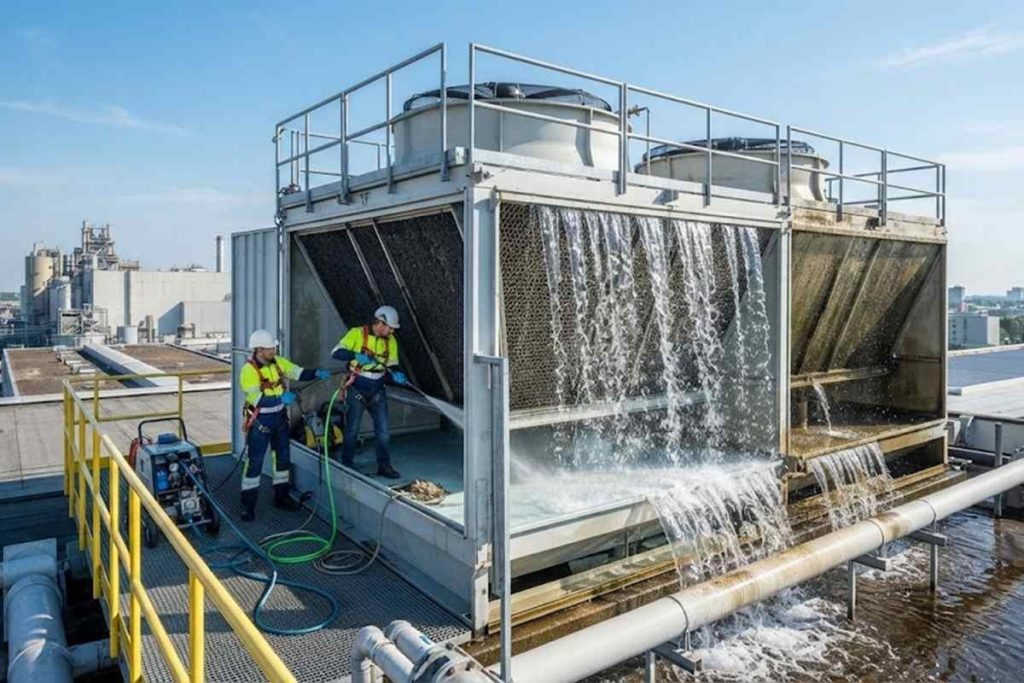
Cooling towers are essential components of commercial, industrial, and manufacturing facilities. They help remove excess heat from equipment and processes by transferring it into the atmosphere. Because cooling towers constantly circulate water, they are prone to accumulating dirt, scale, biological contaminants, and other deposits over time. If these contaminants are not removed regularly, they can significantly reduce the system’s efficiency and increase operating costs.
Professional cooling tower cleaning services are designed to eliminate harmful buildup, maintain optimal performance, and protect the equipment from premature wear. Routine cleaning not only enhances the efficiency of the cooling system but also improves reliability, extends equipment life, and ensures compliance with health and safety standards.
Understanding how these services improve efficiency can help businesses make informed maintenance decisions and reduce long-term operational expenses.
How These Services Boost Efficiency?
Professional cooling tower cleaning targets every major issue that affects system performance. From removing scale deposits to preventing biological contamination, cooling tower cleaning services ensure that the cooling tower operates at maximum efficiency while minimizing maintenance costs and energy usage.
1. Removal of Scale Deposits
One of the most common problems in cooling towers is the formation of mineral scales. As water evaporates, dissolved minerals such as calcium and magnesium remain behind, creating hard deposits on heat exchange surfaces.
Scale buildup negatively impacts efficiency because it acts as an insulating layer that prevents heat from transferring effectively.
Professional cleaning services remove these deposits using specialized equipment and approved cleaning solutions. Once the scale is eliminated, the cooling system can exchange heat more efficiently, allowing it to maintain the desired operating temperature with less effort.
Regular removal of scale also reduces stress on pumps and other system components, helping them perform more efficiently.
2. Eliminating Dirt and Debris
Cooling towers are exposed to the outdoor environment, making them vulnerable to dust, leaves, pollen, insects, and airborne debris. Over time, these contaminants settle inside the tower, clog water distribution systems, and restrict airflow.
Professional cleaning removes accumulated debris from all critical components, including:
- Fill media
- Water basins
- Spray nozzles
- Drift eliminators
- Air intake sections
Clean components allow water and air to circulate freely, enabling the cooling tower to perform at its intended capacity. Removing debris also minimizes blockages that could otherwise lead to equipment failure or uneven cooling.
3. Controlling Biological Growth
Warm, moist environments provide ideal conditions for bacteria, algae, mold, and fungi to grow inside cooling towers. Without proper maintenance, biological contamination can spread quickly and reduce overall system efficiency.
Professional cooling tower cleaning services include thorough disinfection to eliminate harmful microorganisms before they become a serious problem.
Benefits of biological control include:
- Improved water quality
- Reduced biofilm formation
- Better system performance
- Lower health risks
- More consistent cooling efficiency
Controlling biological growth also reduces the likelihood of unpleasant odors and helps maintain a safer working environment.
4. Improving Heat Transfer
Efficient heat transfer is the primary purpose of every cooling tower. Any contamination that coats heat exchange surfaces reduces the system’s ability to remove heat from circulating water.
Cleaning services restore heat transfer surfaces by removing:
- Mineral scale
- Sludge
- Biofilm
- Dirt accumulation
Once these surfaces are clean, heat moves more efficiently from the process water into the atmosphere. Improved heat transfer means the cooling tower can achieve the desired cooling effect more quickly while using less energy.
This enhanced performance supports stable industrial processes and reduces the workload on connected HVAC or manufacturing equipment.
5. Reducing Energy Consumption
Dirty cooling towers require pumps, fans, and other mechanical components to work harder in order to maintain the required cooling capacity. Increased workload directly translates into higher electricity consumption.
Routine cleaning helps reduce energy usage by restoring efficient operation throughout the entire system.
Some of the ways cleaning lowers energy consumption include:
- Reducing airflow resistance
- Improving water circulation
- Restoring heat transfer efficiency
- Preventing clogged spray nozzles
- Minimizing equipment strain
Lower energy consumption leads to reduced utility bills and contributes to more sustainable facility operations.
6. Enhancing Water Flow
Efficient water circulation is critical for proper cooling tower performance. Dirt, sediment, algae, and scale can partially block pipes, strainers, spray nozzles, and distribution systems.
Restricted water flow creates uneven cooling and forces pumps to operate under greater pressure.
Professional cooling tower cleaning services restore smooth water circulation throughout the cooling tower. Improved flow allows water to be distributed evenly across the fill material, maximizing contact with airflow and increasing cooling efficiency.
Proper water movement also reduces pressure on pumps, helping maintain consistent system performance.
7. Extending Equipment Lifespan
Cooling towers represent a significant investment for commercial and industrial facilities. Without regular cleaning, accumulated contaminants accelerate corrosion, wear, and mechanical damage.
Routine maintenance protects essential components such as:
- Pumps
- Fans
- Heat exchangers
- Motors
- Fill media
- Water distribution systems
When equipment remains clean, components experience less strain and operate under more favorable conditions. This reduces repair frequency and extends the overall lifespan of the cooling tower.
Businesses benefit from lower maintenance costs and fewer expensive equipment replacements over time.
8. Maintaining Regulatory Compliance
Many industries must comply with health, environmental, and workplace safety regulations regarding cooling tower maintenance. Improperly maintained towers can become breeding grounds for harmful bacteria, including Legionella, which poses serious health risks.
Professional cooling tower cleaning services help facilities meet regulatory requirements by maintaining hygienic operating conditions and following recommended cleaning procedures.
Proper maintenance also supports:
- Water treatment programs
- Health inspections
- Environmental standards
- Workplace safety requirements
- Risk management policies
Maintaining compliance protects businesses from potential penalties while demonstrating a commitment to employee and public safety.
9. Improving Indoor Comfort
Cooling towers play an important role in HVAC systems that regulate indoor temperatures in offices, hospitals, shopping centers, hotels, and industrial buildings. Businesses that invest in hvac services penang alongside routine cooling tower cleaning can achieve more reliable climate control, better energy efficiency, and improved overall system performance.
When the cooling tower operates efficiently, the HVAC system can maintain comfortable indoor conditions with greater consistency.
Clean cooling towers help provide:
- Stable indoor temperatures
- Better humidity control
- Improved occupant comfort
- Reliable air conditioning performance
- Enhanced workplace productivity
Efficient cooling also reduces unnecessary strain on air conditioning equipment, allowing the entire HVAC system to perform more effectively.
10. Reducing Operational Downtime
Unexpected cooling tower failures can interrupt production, affect manufacturing processes, and create costly downtime for businesses.
Many breakdowns occur because contaminants are allowed to accumulate until they cause equipment malfunction.
Regular professional cleaning helps identify developing issues before they become major problems. During cleaning, technicians often inspect components for signs of corrosion, wear, leaks, or damage.
Preventive maintenance reduces the likelihood of emergency repairs and keeps cooling systems operating reliably throughout the year.
Minimizing downtime offers several advantages:
- Continuous production
- Lower repair costs
- Improved operational reliability
- Better resource utilization
- Increased business productivity
Reliable cooling systems allow facilities to operate without unnecessary interruptions.
Why Trust Wincool Engineering?
Wincool Engineering Sdn. Bhd. provides professional cooling tower cleaning services that help businesses maintain efficient and reliable cooling systems. With experienced technicians and proven cleaning methods, the company removes scale, dirt, debris, and biological buildup to improve system performance while supporting safe and effective operation.
The company is committed to quality workmanship, dependable service, and customer satisfaction. By offering tailored maintenance solutions and focusing on preventive care, it helps extend equipment lifespan, reduce downtime, and keep cooling towers operating at peak efficiency.
Conclusion
Cooling tower cleaning services are an essential part of maintaining efficient, reliable, and cost-effective cooling systems. Over time, scale deposits, dirt, debris, and biological growth reduce the system’s ability to transfer heat, circulate water, and operate efficiently. Professional cleaning removes these performance barriers and restores the cooling tower to optimal working condition.
By improving heat transfer, reducing energy consumption, enhancing water flow, controlling biological contamination, and preventing equipment damage, regular cleaning delivers measurable operational benefits. It also extends equipment lifespan, supports regulatory compliance, improves indoor comfort, and minimizes costly downtime.
Investing in routine cooling tower cleaning is not simply a maintenance task—it is a proactive strategy that improves efficiency, reduces operating expenses, and ensures dependable performance for years to come.